Tuesday, September 14, 2010

Comedy Workshop: Soundtrack Challenge

This year I've decided to get away from spec scripts as much as possible and center the workshop on making original material. I had a conversation with my agent that pretty much confirmed my suspicions about the usefulness of writing a spec half hour of a current show in the hopes of getting on staff. Show runners are looking at original material, stand up routines, online content and features for staff writers. So for now we get to have a lot more fun.

This week I had the writers form teams and I gave each team a 2 minute video clip to record a new soundtrack. I gave them a one hour time limit to complete the challenge. Here are the decidedly NOT SAFE FOR WORK results.  Former students may recognize some of these titles from Movie Night.

Team One: From the film "Alice, Sweet Alice."


Team Two: From the film "Susan Slade."


Team Three (AKA Team Ignorant): From the film "Lady in a Cage."


Friday, September 3, 2010

keeping it real

Empathy is the key to being a good writer.  I've read plenty of stuff from writers that was clever, that had good jokes, cool action sequences or great images but if it's lacking empathy for the characters it always falls flat. In screenwriting instruction for some reason there's not as much emphasis put on empathy as there is on "the rules." You know those rules, "no voice over, no flashback... etc." Empathy should be the one and only rule. If you don't care, we don't care. Developing empathy and getting it on the page takes time to do but it's worth the effort. First of all you have to honestly ask yourself, "how would it feel if..." moment by moment through your story. How would it feel if a recently dumped guy who hasn't been able to get hold of the direction of his life ran into his ex-girlfriend while buying comfort food? The quick answer is "shitty" but we're not looking for quick. We're looking for a way to dramatize those feelings. To explore as much of it as deeply as possible.
We've started the semester at AFI and the students are making their first short films. So I've been reviewing scripts and working with teams to make sure they have a really polished draft before they go into production. I've read the first drafts and they're all like first drafts should be -- not perfect.  Sometimes you've just got to write a draft of the script in order to understand the story -- but for a rewrite, I don't think jumping right into the next draft is always helpful. Particularly if the team hasn't figured out exactly what they want out of that second draft.  It's time for an expanded outline that includes a scene by scene exploration of the subtext.  Of course to write the subtext, you've got to have empathy.
So a scene that could be described in terms of plot, "He goes to the 7-11 and runs into his ex-girlfriend" gets expanded to include all the "interior" stuff. There she is, looking better than ever and she's with her friends. And him? He's got a giant Kit-Kat in his hand, childish and well -- he's not getting any skinnier. She's the one he thought he might marry. He hasn't told his parents  yet and they love her -- he suspects they love her a little  more than him. At first he hopes maybe she didn't see him, he's almost out the door when she calls out to him, "Jerry?" Shit. How is he going to get out of this with his dignity intact? He tries to act nonchalant, waves in a way that is both erratic and effeminate. She's going out -- one of her friends has a connection to get into the extra, extra VIP club in the W. What's he up to? Isn't it obvious, he's wearing his high school sweatpants he referred to as his "eating clothes." He makes up some absurd story about his grandiose plans for the evening and slips out the door. She knows he's lied to her but is too embarrassed for him to challenge the lie.
Explore it in Word before you explore it in Final Draft.  Something about writing prose seems to free the writer from having to figure out the exact dialogue, the exact descriptions and allows them to empathize with the character.  Empathy is key here -- feeling the real and honest emotions of your character, moment to moment -- not letting the plot drive the story, but putting the needs and feelings of your character up front so you discover what you need to do next.

Wednesday, June 9, 2010

today is not the day

Picking out a suit to wear to graduation, I pulled out my black Armani. It is what it is and it makes me look thin.
As I removed it from its garment bag, the program for my Aunt's funeral last November fell out of the pocket.
Today is not the day for wearing funeral suits. I am wearing an eighty dollar seersucker suit I bought at Target instead. I apologize in advance but I feel like celebrating today.

Tuesday, March 30, 2010

squaw valley summer workshop


After graduating your work on your scripts may be suffering. You did pitch fest, you did everything you were supposed to do but somehow the script isn't grabbing attention. I find that with time and perspective you're ready to rewrite but you need something to jumpstart the process. What you may need is a workshop. You should consider, if you're not doing this already, joining a writing group. You can find them on Craigslist or you can put them together from your peers. You may also want to look into things like the Film Independent Screenwriting Lab (an excellent program I myself attended as a participant). I'm not a huge fan of applying for the Sundance Lab unless you have good connections and are very good at networking. I think it's an excellent program, but it requires knowing the right people. That's not to say those attending don't deserve to be there -- they do -- they have top notch work, but they also understood that they had to give their applications an extra push.
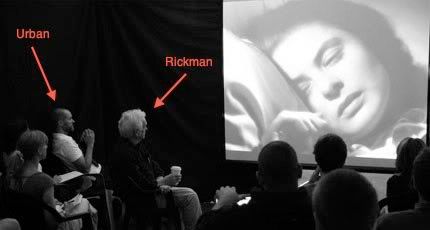
So every summer for the past four years I've been teaching a workshop at Squaw Valley. It's an intensive week long screenwriting retreat in the high altitude near Lake Tahoe. I'm one of several instructors who work one on one for six days with writers to perfect their scripts. The head of AFI's screenwriting department, Tom Rickman, having created the program, teaches there as well. I like to think of this as the Sundance Lab that's under the radar. It doesn't have the prestige but it has the same quality instruction. Recent participants of the program have gone on to produce and direct their screenplays. I was going over the participants from the last couple of years. There are 5 recent participants with their scripts in pre-production, two who have actually shot and are now in post production, a handful of scripts that have been sold or optioned and many more that have won screenplay awards.
Last year two of my former students attended. This year I'm hoping that a few more will consider the program. That's why I'm making this offer: If you get in to the program this summer and attend I will give you a $100 rebate on your Squaw tuition. This is limited to three former students from any classes at any school where I've taught. You must have graduated by August 2010 in order to qualify. And... If you're in LA, I probably can even give you a lift up to Lake Tahoe as I drive up there every year. So, again, the first three who apply, get in and attend are eligible for this offer. The application deadline is May 1st. You can find all the application details here.

Saturday, March 27, 2010

stop it, you're freaking me out!


Last night I tricked my husband into watching "House of the Devil" on DVD. I told him it was a sweet little movie from Sweden about babysitting. I'd been hearing good reviews about this mostly unknown horror film from 2009 and wanted to check it out. I think the film effectively does two things: first it creates incredible tension by playing on suspense. Honestly, not much at all happens for the first 70 minutes. There's a few tidbits thrown in here and there, but it's hardly up to modern horror film standards in terms of pacing. I don't mean that as a criticism, in fact I don't think it's a bad thing at all. That brings me to the second point, it very effectively recreates the mood of early 80's horror. I can remember being traumatized by late night commercials for "Mother's Day" and "Let's Scare Jessica To Death" running during the late late movie. Ah the joys of being a child during the era of laissez-faire parenting -- your time has passed.
I was talking to a filmmaker about his movie The Puffy Chair and how when I first saw it there were these long, tense passages where nothing seemed to be happening and several of us in the audience found ourselves filled with dread -- dread that something terrible was about to happen. The movie is a comedy for those who have not seen it. He said that generally we've come to expect the worst -- so when things are just sailing along we get anxious. This is very much the case in The House of the Devil. The main character puts on a gigantic walkman and bops around a house and you just know the shit's about to get real.
I've been thinking a lot about horror -- how hard it is to evoke on the page as a blueprint for what's to come. For me the most effective horror is character based and psychological. It isn't about attractive teenagers saying glib things to each other before being dispatched but rather about all those deeply felt human emotions. In the Strangers the writer/director uses the space of the first act to give us character information. Now he's told us something bad is going to happen and in fact given us a glimpse of how bad it's going to be. Then we learn about this couple. He wants to get married, she doesn't -- it's not Scenes From A Marriage but it's effective enough. Then the ordeal begins. If you're interested, read the first draft of the script and see how it compares to the finished film. In one particularly interesting passage starting on page 63 the couple shoot an old man who wanders into the house randomly. In the finished film Bertino changes out the random old man with a close friend of the main character? All the creepy language, descriptions of the Strangers looming masks in the darkness are still there but the switch of the close friend is important. Relationships. The main character cares about his friend more than the old man. It's more tragic and therefore more horrific and it further motivates him to try to seek revenge by going after the strangers as he does in the next scene. I think I've just discovered a "trick of the trade" as my former instructor Allen Estrin called them: "If you really want to scare, you've really got to care." That is to say, if we don't care about the characters, if we're not invested in the outcome, we're not feeling the dread and we're not scared.

Friday, March 26, 2010

introducing...

Have you ever read one of those scripts that starts with the main character just kind of hanging around doing nothing? Or a character tells you in expository language what's wrong with them -- maybe they're having a chat somewhere being dull. Sometimes writer take the concept of "Ordinary World" (those first ten pages) a little too literally. There's a notion that you have ten pages to grab your reader. I would argue that you have one. The first page. Why not start your movie there? Instead of showing us some dull ponderous moment jump right into the action.

Take a look at the opening page from Knocked Up.

EXT. BEN’S HOUSE - DAY

BEN STONE, 23, cute in a chunky Jewish guy sort of way, boxes one of his roommates, MARTIN. His other roommates, JAY and JASON fight with broom sticks. JONAH drinks beer on the couch spectating.

Quick Images:
  • We see Ben and Jay fighting. At one point they fight with gloves which are on fire, balancing on a plank over a dirty pool.
  • Ben now has a fishbowl filled with weed smoke over his head. There is a smoking joint in his mouth, making the bowl get cloudier and cloudier. He starts coughing hysterically and takes it off.
  • A boom box is playing. The boys are now free style rapping. It is terrible but they are having a blast. Pot is being smoked. Beer is around.

EXT. AMUSEMENT PARK - A DIFFERENT DAY

Ben and roommates ride a terrifying rollercoaster.

INT. ALLISON’S BEDROOM - MORNING
ALISON SCOTT, pretty, 24, wakes up to her radio alarm.

Okay - that was actually half a page. We met the two main characters and we know plenty.

Here's what we know:
  • Ben is a man child.
  • Ben and his friends love pot and love having a good time.
  • Ben probably doesn't have a job. I'm guessing this from the context.
  • Anything is possible with these guys. They're not your run of the mill lame potheads. They actually came up with the idea to fight on a plank over a pool with burning gloves on.
  • I also met Allison - In one line I know that she's the opposite of them. How? Juxtoposition and she wakes up to an alarm clock.
  • She's got someplace to go. Probably a job. She's pretty - she takes care of herself...
  • Unlike Ben who is cute but chunky.
That was one half of a page. The writer here does not load the script down with a million camera angles and editorial comments ie: Ben knows that his carefree days are soon coming to an end. (Directors, I'm talking to you). He trusts that the reader can get the film without being pummeled by his vision. He creates an easy spacious read that gives us everything we need to know and just that. Save the vision for the shot sheet.

Different genre, here from Bourne Ultimatum:

EXT. NIGHT. HOUSING PROJECTS -- MOSCOW

SMASH CUT

MOTION -- flat out -- it’s us -- we’re running -- stumbling -- breathing rushed -- blood in the snow...

We are JASON BOURNE and we’re running down an alley... Supered below: MOSCOW
BLUE LIGHTS -- from the distance -- strobing through the night -- rushing toward us -- POLICE CARS -- three of them - - SIRENS HOWLING as they bear down -- closer -- faster -- until they whip past the alley...

Up against the wall -- BOURNE is hidden in the shadows.

BOURNE is badly wounded -- shot through the shoulder -- bruises and broken bones from the final car chase in SUPREMACY...

With a GROAN, he lifts himself up, staggers across a park toward a PHARMACY...

4 INT. NIGHT. PHARMACY -- MOSCOW

ROWS of MEDICINE and FIRST AID supplies, and in the background, a DOOR being jimmied...It’s BOURNE...The ALARM goes off...

MACRO ON -- MEDICINE BOTTLE VICODIN, as BOURNE grabs it...Then PENICILLIN... Then SURGICAL SUPPLIES: Scalpel...Forceps...Sutures...Cotton gauze...Betadine...

BOURNE finds a large sink...Rests his gun there...Lays out SURGICAL SUPPLIES...Checks out his back in the mirror...Opens the capsules of penicillin and pours the powder directly into the wound...Begins treating himself...

Okay what do we know?
  • We're on the run with Jason Bourne. Who is this guy?
  • He can run with a bullet in him and broken bones. That's serious pain. Who knows how to manage that kind of pain? Someone with special training. I'm thinking some kind of military training.
  • He also knows how to find a pharmacy in Moscow and treat himself. Does he speak the language? Maybe. More special training here. Knows how to jimmy a lock. Has emergency medical training.
  • And he's pretty cool about it -- there are Russian cops closing in but he's keeping his head as he REMOVES A FREAKING BULLET FROM HIS BODY!!!
  • Anything is possible with this guy -- I want to stick around and find out more.
And that was 3/4 of a page. Here in Bourne we see some shots described, but they're specific to the plot. We need that macro on Vicodin to understand what is happening.

When I write a script I like to look at how other writers, better writers, have done it. Those scripts become a standard. Am I writing something that's as good as? If not, how can I make it so? Am I being economical? Am I trusting the reader? Am I grabbing the reader as I introduce my characters? If not, why?

Wednesday, February 17, 2010

Script Questionnaire

Years ago I was listening to a podcast from Michael Ardnt, writer of Little Miss Sunshine, and he was talking about the process he went through to get the script into shape before giving it to a producer. One of the tools he used was a questionnaire. His reasoning being that studios spend money on test screenings to find out what works in a movie, why not do the same for a script. Interestingly the questionnaire allowed him to get intelligent and useful feedback from people who weren't necessarily familiar with screenplays. He divided the questionnaire into 3 parts.

For the first part he listed the top five or so main characters along with a brief description and asked for a 1 to 10 ranking (1 being unfavorable and 10 being the most favorable) along with general comments.

He then did the same for the plot/story, listing the top seven to ten plot points in the film -- describing each in brief and providing page numbers for reference. He applied the same 1 to 10 scale and left room for comments.

The last section of the questionnaire focused on what he had self identified as problematic within the script. Again, here he lists out the top ten or so script problems that he's noticed and asks for rankings. Here though, 1 equals not a problem and 10 means this is a severe problem. This last section is very important because in his (and my) experience when you admit that there's a problem in the script your readers are less concerned about hurting your feelings and more honest about their reaction to the material.

The other great thing about doing a questionnaire is that you can get scientific about what's working and what's not working. You want your main characters to all be in the 9 to 10 range. You want your plot points in the same range as well -- and if they're not, you know exactly what you need to work on.

I like to use this tool after I've done a few drafts and have started to run out of ideas. By pooling a large sample (7 to 10 readers) I've got a better handle on what I need to fix and in the best cases, some possible new solutions via the comments on the questionnaire. If you're stuck for readers, try Facebook. Seriously. I used a similar social networking site last time to recruit readers and thanks to the questionnaire was able to solicit quality feedback.