Essentially every movie is about mortality. I mentioned in a previous post that when a movie is working it is an answer to the question, "how do I live my life?" Well, put another way, a good movie (in my opinion) is about a character figuring something important out before it's too late. All genres, all tones, it's about figuring out that thing that is keeping them from living fully (and if it goes on and on like this, will probably kill them). Kill being literal or figurative, but for sure literal is better. Bigger stakes, better story. That whole thing.
I think people get too wrapped up in plot. Clever plots, contrived plots, plots that serve a device or a joke rather than character driven plot. I've seen writers contort their characters into crazy positions just to make sure they hit a plot point. They're all twisted up like a balloon animal and then invariably the note comes back, "it doesn't feel real." Well of course not. We're creatures who take the path of least resistance. People don't do weird convoluted things for no reason. Who has the time?
For example, pretty much every bad horror film has a scene where a character goes into the basement despite all kinds of overwhelming evidence that they SHOULD NOT GO IN THE BASEMENT. We know it's fake. We know no one would do that. They'd get the eff out of there. But if they don't go down there then the movie is over. So the trick is getting them to go into the basement without it seeming like a bad decision to the character and maybe even the audience, too. So how do you do that? You tie it all into some essential need that the character has. There's some part of them that has to go into the basement.
It's their motivation. Motivation needs to be true and universally understood. "They all will think I'm a pussy if I don't go down in the basement. I'll show them. I'll show Brad -- he thinks he's so cool. I see the way Sarah's looking at him. I'll show her, too. I'm fucking doing this. There's nothing down there -- these stories about the basement being a portal to hell, they're just bullshit dreamed up to scare people." And off he goes -- he's motivated to prove his courage to those who doubt him and win back the affection of the girl he thinks he's lost. Poor guy. The basement is a portal to hell. Pride goeth before a fall. A lesson learned, sadly too late. That's usually how horror films work. So in another genre, you might let your character off the hook. They get off with a warning. They learn the lesson before it's too late.
Getting slightly tangential I heard something yesterday that I thought was quite fascinating. Male archetypes typically go on a journey to discover their true self. Female archetypes typically are forced to make a difficult choice between two things. I spoke with a friend of mine who was a womens study major about this. She says it's true and totally sexist. Women are typically shown having to choose between two guys (Twilight, I'm looking in your direction). Whereas men are allowed to discover their true self. (The Other Guys). I think Legally Blonde and The House Bunny are two examples of a female archetype discovering her true self. While both had "the guy" sub-plots, they were more about female empowerment. Of course, my friend hated those movies for other reasons of sexism so, you know, you can't win.
You are going to die. I'll tell you, the month I've had this message has been loud and clear. Go watch Harold and Maude, it will tell you everything you need to know in answer to the question, "how do I live my life now?"
Friday, December 3, 2010

Sunday, November 7, 2010
web fest 2010
Every year I ask the students in my comedy workshop to send me links to the web content they find interesting, amusing, different. There's so much good stuff out there, mixed in with an even huger dose of crapola. With that in mind, and a reminder, comedy is subjective, our annual line up:
Here are my current faves that aren't between two ferns:
- Robert Taylor sends in the Ugly Betty tie in.
- Felipe Domiano goes international with: Não Faz Sentido, Larica Total and Greatest Freak Out Ever
- Alex Ankrom is in a Star Wars mood with Chad Vader and The Vader Sessions.
- Catalina Aguilar Mastreta offers The Website is Down, Young American Bodies and The Michael Cera School of Acting.
- Ubi Okebie wonders what Avatar will be like in 5 years.
- Sadie Dean likes Yacht Rock.
- Leah Cameron is a fan of Delusional Downtown Divas, has visited Portlandia and wants Tim and Eric to sit on you.
- Anthony Weiss is Between Two Ferns. (Every episode of this is genius)
- Kelly Rothberger has experienced a Bitter Lawyer. (And who hasn't?)
- Ryan Serry knows all about The Roommating Show.
- Eric Zacharias is also a fan of Ferns and Drunk History.
- Maxwell Towsen was first to respond with a little something we can all relate to.
Here are my current faves that aren't between two ferns:
- An oldie, but a goodie. Poodle Workout.
- The Central Florida Zoo.
- Funnier in concept than execution Ikea Heights.
- Not at all funny but whatevs -- Charlie White's a genius.
- But of course black drag performance artists inform the cultural landscape.
- And when it comes to arty and gay I can't leave out Prettythingsss.
Monday, November 1, 2010
lives of silent desperation
I had this idea for an assignment after reading that 90% of all office workers despise their jobs. Not just dislike but DESPISE. That is a deeply held emotion. No wonder there are so many stress related illnesses in this country. So here's the assignment. Using the avatars at xtranormal.com the writers (in teams of 2) had 2 hours to come up with an office scenario, drawing on personal experience, that got at the heart of being in a place that makes you miserable. I didn't want jokes, I wanted emotion. I wanted it to convey that "death by a thousand cuts" that is the grinding day to day for so many people. Here are the results.
Friday, October 29, 2010
ars moriendi
I heard this quote last week, "A story, when it's working well, is an answer to the question 'how should I live my life.'" It's a pretty elegant way of summing up all the do's and don'ts of screenwriting. I should mention that this entry is a bit of an experiment. Last month I had back surgery and I woke up this morning with a nasty back ache -- something that I thought was a part of the past. Anyhow, long story short, my doctor says it's most likely a muscle spasm due to all the coughing and sneezing of my recent cold and he's prescribed Valium as a muscle relaxant. I'm on it right this instant! It's fabulous. This, however is not an answer to the question how should I live my life now. This is what I call "the damage."
Every protagonist, at the start of their journey has some sort of "damage" that will be healed over the course of the journey. My damage, my latest medical catastrophe, is symptomatic of some sort of personal ambition for thrill seeking that drives me to take physical risks that often result in injury.
For example: Age 12, I thought it would be fun to ride on a pump-jack. (That's one of those pumps one sees in oil fields that looks kind of like a horse with a bobbing head.) Anyhow, it was not fun -- especially when I fell off and nearly lost my right leg in the gear mechanisms that power the hydraulics.
Or at age 20 when I thought it would be fun to go for a walk in my old neighborhood at 1 in the morning. Anyone can tell you that Miami is not safe. You'd be safer in downtown Tehran wearing a star of David bikini and gay pride rainbow tube top. Anyhow, I wound up getting stabbed a bunch of times.
Or at 38 when I got really into bicycling and decided that it would be reasonable to replace my car with a really fast road bike. Guess how that worked out.

Or most recently when I thought I'd get back in shape following the two years of recovery from the massive fracture of my left arm only to throw out my back at the gym which resulted in me having to have surgery to fix a herniated disc.
So the question is, if my damage is I'm this person who keeps chasing after some kind of ideal, but in the process keeps hurting himself, how am I supposed to live my life now? What's the movie that I need to see that answers this question. I'm thinking it's "The Wrestler" but I don't really like how that ended for him. Doomed to die a death of a thousand cuts (a dead end job and a withering of his dreams) or go out in a blaze of glory. Are my only options that bleak?
So what's your damage and who do you need to be to be whole again or for the first time? So often the answer is not what you want, but what you need.
The Wrestler need not go out in a blaze of glory were he willing to dig in and make some fundamental life changes. Like he'd have to go to a bunch of therapy and maybe take up pilates or some kind of meditation practice. Given time he might repair some of the damage with his daughter. He might come to respect himself enough to seek appropriate relationships from emotionally available women. But that movie sounds really boring.
I guess for me to live out that kind of movie, I'd have to re-evaluate my notion of boring. Is it possible to make "healthy" interesting?
Yeah. My other favorite film of late "The Savages" is all about that. It's about a woman on a self destructive path who in dealing with her dying father comes to a new understanding about the significance of her life. She learns to love herself as is -- not a super successful playwright but rather a temp who is able to put on a play in a community theater space. Not the desired woman of a distant lover, but the owner of an affectionate and loyal dog. No longer seeking the love of a father who will never be capable of appreciating her, but accepting of love from her true friends and family. So in that regard, "healthy" can be interesting.
A story, when it is working, is an answer to the question, "how do I live my life now?"
Every protagonist, at the start of their journey has some sort of "damage" that will be healed over the course of the journey. My damage, my latest medical catastrophe, is symptomatic of some sort of personal ambition for thrill seeking that drives me to take physical risks that often result in injury.
For example: Age 12, I thought it would be fun to ride on a pump-jack. (That's one of those pumps one sees in oil fields that looks kind of like a horse with a bobbing head.) Anyhow, it was not fun -- especially when I fell off and nearly lost my right leg in the gear mechanisms that power the hydraulics.
Or at age 20 when I thought it would be fun to go for a walk in my old neighborhood at 1 in the morning. Anyone can tell you that Miami is not safe. You'd be safer in downtown Tehran wearing a star of David bikini and gay pride rainbow tube top. Anyhow, I wound up getting stabbed a bunch of times.
Or at 38 when I got really into bicycling and decided that it would be reasonable to replace my car with a really fast road bike. Guess how that worked out.

Or most recently when I thought I'd get back in shape following the two years of recovery from the massive fracture of my left arm only to throw out my back at the gym which resulted in me having to have surgery to fix a herniated disc.
So the question is, if my damage is I'm this person who keeps chasing after some kind of ideal, but in the process keeps hurting himself, how am I supposed to live my life now? What's the movie that I need to see that answers this question. I'm thinking it's "The Wrestler" but I don't really like how that ended for him. Doomed to die a death of a thousand cuts (a dead end job and a withering of his dreams) or go out in a blaze of glory. Are my only options that bleak?
So what's your damage and who do you need to be to be whole again or for the first time? So often the answer is not what you want, but what you need.
The Wrestler need not go out in a blaze of glory were he willing to dig in and make some fundamental life changes. Like he'd have to go to a bunch of therapy and maybe take up pilates or some kind of meditation practice. Given time he might repair some of the damage with his daughter. He might come to respect himself enough to seek appropriate relationships from emotionally available women. But that movie sounds really boring.
I guess for me to live out that kind of movie, I'd have to re-evaluate my notion of boring. Is it possible to make "healthy" interesting?
Yeah. My other favorite film of late "The Savages" is all about that. It's about a woman on a self destructive path who in dealing with her dying father comes to a new understanding about the significance of her life. She learns to love herself as is -- not a super successful playwright but rather a temp who is able to put on a play in a community theater space. Not the desired woman of a distant lover, but the owner of an affectionate and loyal dog. No longer seeking the love of a father who will never be capable of appreciating her, but accepting of love from her true friends and family. So in that regard, "healthy" can be interesting.
A story, when it is working, is an answer to the question, "how do I live my life now?"
Friday, October 1, 2010
webisodes rolling in
More and more of my former students are taking production into their own hands and creating content for the web. I'm a big supporter of these efforts because they pay off in several ways. First they have creative satisfaction. They're making new work and seeing it fully realized as opposed to writing a script that may or may not ever see the light of day. Secondly they're learning about storytelling. Things that work on the page don't always work out in production. With these types of undertakings you can always go back and get a quick pick up shot -- and in the process you understand that much more about the transition from script to screen so that the next script will be that much stronger. The last thing is, posting something on youtube is the modern version of the query letter. A number of filmmakers have told me that they have had way more industry opportunities come from some five minute short they made for $30 and a pizza than the thesis film they spent $50K on in grad school.
So, from the class of 2010, The Parking Spot.
So, from the class of 2010, The Parking Spot.
Tuesday, September 14, 2010
Comedy Workshop: Soundtrack Challenge
This year I've decided to get away from spec scripts as much as possible and center the workshop on making original material. I had a conversation with my agent that pretty much confirmed my suspicions about the usefulness of writing a spec half hour of a current show in the hopes of getting on staff. Show runners are looking at original material, stand up routines, online content and features for staff writers. So for now we get to have a lot more fun.
This week I had the writers form teams and I gave each team a 2 minute video clip to record a new soundtrack. I gave them a one hour time limit to complete the challenge. Here are the decidedly NOT SAFE FOR WORK results. Former students may recognize some of these titles from Movie Night.
Team One: From the film "Alice, Sweet Alice."
Team Two: From the film "Susan Slade."
Team Three (AKA Team Ignorant): From the film "Lady in a Cage."
This week I had the writers form teams and I gave each team a 2 minute video clip to record a new soundtrack. I gave them a one hour time limit to complete the challenge. Here are the decidedly NOT SAFE FOR WORK results. Former students may recognize some of these titles from Movie Night.
Team One: From the film "Alice, Sweet Alice."
Team Two: From the film "Susan Slade."
Team Three (AKA Team Ignorant): From the film "Lady in a Cage."
Friday, September 3, 2010
keeping it real
Empathy is the key to being a good writer. I've read plenty of stuff from writers that was clever, that had good jokes, cool action sequences or great images but if it's lacking empathy for the characters it always falls flat. In screenwriting instruction for some reason there's not as much emphasis put on empathy as there is on "the rules." You know those rules, "no voice over, no flashback... etc." Empathy should be the one and only rule. If you don't care, we don't care. Developing empathy and getting it on the page takes time to do but it's worth the effort. First of all you have to honestly ask yourself, "how would it feel if..." moment by moment through your story. How would it feel if a recently dumped guy who hasn't been able to get hold of the direction of his life ran into his ex-girlfriend while buying comfort food? The quick answer is "shitty" but we're not looking for quick. We're looking for a way to dramatize those feelings. To explore as much of it as deeply as possible.
We've started the semester at AFI and the students are making their first short films. So I've been reviewing scripts and working with teams to make sure they have a really polished draft before they go into production. I've read the first drafts and they're all like first drafts should be -- not perfect. Sometimes you've just got to write a draft of the script in order to understand the story -- but for a rewrite, I don't think jumping right into the next draft is always helpful. Particularly if the team hasn't figured out exactly what they want out of that second draft. It's time for an expanded outline that includes a scene by scene exploration of the subtext. Of course to write the subtext, you've got to have empathy.
So a scene that could be described in terms of plot, "He goes to the 7-11 and runs into his ex-girlfriend" gets expanded to include all the "interior" stuff. There she is, looking better than ever and she's with her friends. And him? He's got a giant Kit-Kat in his hand, childish and well -- he's not getting any skinnier. She's the one he thought he might marry. He hasn't told his parents yet and they love her -- he suspects they love her a little more than him. At first he hopes maybe she didn't see him, he's almost out the door when she calls out to him, "Jerry?" Shit. How is he going to get out of this with his dignity intact? He tries to act nonchalant, waves in a way that is both erratic and effeminate. She's going out -- one of her friends has a connection to get into the extra, extra VIP club in the W. What's he up to? Isn't it obvious, he's wearing his high school sweatpants he referred to as his "eating clothes." He makes up some absurd story about his grandiose plans for the evening and slips out the door. She knows he's lied to her but is too embarrassed for him to challenge the lie.
Explore it in Word before you explore it in Final Draft. Something about writing prose seems to free the writer from having to figure out the exact dialogue, the exact descriptions and allows them to empathize with the character. Empathy is key here -- feeling the real and honest emotions of your character, moment to moment -- not letting the plot drive the story, but putting the needs and feelings of your character up front so you discover what you need to do next.
We've started the semester at AFI and the students are making their first short films. So I've been reviewing scripts and working with teams to make sure they have a really polished draft before they go into production. I've read the first drafts and they're all like first drafts should be -- not perfect. Sometimes you've just got to write a draft of the script in order to understand the story -- but for a rewrite, I don't think jumping right into the next draft is always helpful. Particularly if the team hasn't figured out exactly what they want out of that second draft. It's time for an expanded outline that includes a scene by scene exploration of the subtext. Of course to write the subtext, you've got to have empathy.
So a scene that could be described in terms of plot, "He goes to the 7-11 and runs into his ex-girlfriend" gets expanded to include all the "interior" stuff. There she is, looking better than ever and she's with her friends. And him? He's got a giant Kit-Kat in his hand, childish and well -- he's not getting any skinnier. She's the one he thought he might marry. He hasn't told his parents yet and they love her -- he suspects they love her a little more than him. At first he hopes maybe she didn't see him, he's almost out the door when she calls out to him, "Jerry?" Shit. How is he going to get out of this with his dignity intact? He tries to act nonchalant, waves in a way that is both erratic and effeminate. She's going out -- one of her friends has a connection to get into the extra, extra VIP club in the W. What's he up to? Isn't it obvious, he's wearing his high school sweatpants he referred to as his "eating clothes." He makes up some absurd story about his grandiose plans for the evening and slips out the door. She knows he's lied to her but is too embarrassed for him to challenge the lie.
Explore it in Word before you explore it in Final Draft. Something about writing prose seems to free the writer from having to figure out the exact dialogue, the exact descriptions and allows them to empathize with the character. Empathy is key here -- feeling the real and honest emotions of your character, moment to moment -- not letting the plot drive the story, but putting the needs and feelings of your character up front so you discover what you need to do next.
Wednesday, June 9, 2010
today is not the day
Picking out a suit to wear to graduation, I pulled out my black Armani. It is what it is and it makes me look thin.
As I removed it from its garment bag, the program for my Aunt's funeral last November fell out of the pocket.
Today is not the day for wearing funeral suits. I am wearing an eighty dollar seersucker suit I bought at Target instead. I apologize in advance but I feel like celebrating today.
As I removed it from its garment bag, the program for my Aunt's funeral last November fell out of the pocket.
Today is not the day for wearing funeral suits. I am wearing an eighty dollar seersucker suit I bought at Target instead. I apologize in advance but I feel like celebrating today.
Tuesday, March 30, 2010
squaw valley summer workshop
After graduating your work on your scripts may be suffering. You did pitch fest, you did everything you were supposed to do but somehow the script isn't grabbing attention. I find that with time and perspective you're ready to rewrite but you need something to jumpstart the process. What you may need is a workshop. You should consider, if you're not doing this already, joining a writing group. You can find them on Craigslist or you can put them together from your peers. You may also want to look into things like the Film Independent Screenwriting Lab (an excellent program I myself attended as a participant). I'm not a huge fan of applying for the Sundance Lab unless you have good connections and are very good at networking. I think it's an excellent program, but it requires knowing the right people. That's not to say those attending don't deserve to be there -- they do -- they have top notch work, but they also understood that they had to give their applications an extra push.
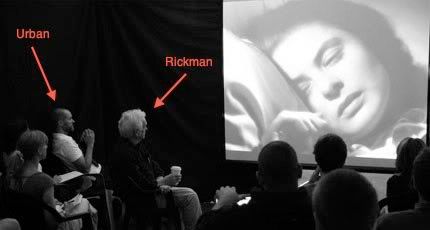
So every summer for the past four years I've been teaching a workshop at Squaw Valley. It's an intensive week long screenwriting retreat in the high altitude near Lake Tahoe. I'm one of several instructors who work one on one for six days with writers to perfect their scripts. The head of AFI's screenwriting department, Tom Rickman, having created the program, teaches there as well. I like to think of this as the Sundance Lab that's under the radar. It doesn't have the prestige but it has the same quality instruction. Recent participants of the program have gone on to produce and direct their screenplays. I was going over the participants from the last couple of years. There are 5 recent participants with their scripts in pre-production, two who have actually shot and are now in post production, a handful of scripts that have been sold or optioned and many more that have won screenplay awards.
Last year two of my former students attended. This year I'm hoping that a few more will consider the program. That's why I'm making this offer: If you get in to the program this summer and attend I will give you a $100 rebate on your Squaw tuition. This is limited to three former students from any classes at any school where I've taught. You must have graduated by August 2010 in order to qualify. And... If you're in LA, I probably can even give you a lift up to Lake Tahoe as I drive up there every year. So, again, the first three who apply, get in and attend are eligible for this offer. The application deadline is May 1st. You can find all the application details here.
Saturday, March 27, 2010
stop it, you're freaking me out!

Last night I tricked my husband into watching "House of the Devil" on DVD. I told him it was a sweet little movie from Sweden about babysitting. I'd been hearing good reviews about this mostly unknown horror film from 2009 and wanted to check it out. I think the film effectively does two things: first it creates incredible tension by playing on suspense. Honestly, not much at all happens for the first 70 minutes. There's a few tidbits thrown in here and there, but it's hardly up to modern horror film standards in terms of pacing. I don't mean that as a criticism, in fact I don't think it's a bad thing at all. That brings me to the second point, it very effectively recreates the mood of early 80's horror. I can remember being traumatized by late night commercials for "Mother's Day" and "Let's Scare Jessica To Death" running during the late late movie. Ah the joys of being a child during the era of laissez-faire parenting -- your time has passed.
I was talking to a filmmaker about his movie The Puffy Chair and how when I first saw it there were these long, tense passages where nothing seemed to be happening and several of us in the audience found ourselves filled with dread -- dread that something terrible was about to happen. The movie is a comedy for those who have not seen it. He said that generally we've come to expect the worst -- so when things are just sailing along we get anxious. This is very much the case in The House of the Devil. The main character puts on a gigantic walkman and bops around a house and you just know the shit's about to get real.
I've been thinking a lot about horror -- how hard it is to evoke on the page as a blueprint for what's to come. For me the most effective horror is character based and psychological. It isn't about attractive teenagers saying glib things to each other before being dispatched but rather about all those deeply felt human emotions. In the Strangers the writer/director uses the space of the first act to give us character information. Now he's told us something bad is going to happen and in fact given us a glimpse of how bad it's going to be. Then we learn about this couple. He wants to get married, she doesn't -- it's not Scenes From A Marriage but it's effective enough. Then the ordeal begins. If you're interested, read the first draft of the script and see how it compares to the finished film. In one particularly interesting passage starting on page 63 the couple shoot an old man who wanders into the house randomly. In the finished film Bertino changes out the random old man with a close friend of the main character? All the creepy language, descriptions of the Strangers looming masks in the darkness are still there but the switch of the close friend is important. Relationships. The main character cares about his friend more than the old man. It's more tragic and therefore more horrific and it further motivates him to try to seek revenge by going after the strangers as he does in the next scene. I think I've just discovered a "trick of the trade" as my former instructor Allen Estrin called them: "If you really want to scare, you've really got to care." That is to say, if we don't care about the characters, if we're not invested in the outcome, we're not feeling the dread and we're not scared.
Friday, March 26, 2010
introducing...
Have you ever read one of those scripts that starts with the main character just kind of hanging around doing nothing? Or a character tells you in expository language what's wrong with them -- maybe they're having a chat somewhere being dull. Sometimes writer take the concept of "Ordinary World" (those first ten pages) a little too literally. There's a notion that you have ten pages to grab your reader. I would argue that you have one. The first page. Why not start your movie there? Instead of showing us some dull ponderous moment jump right into the action.
Take a look at the opening page from Knocked Up.
EXT. BEN’S HOUSE - DAY
BEN STONE, 23, cute in a chunky Jewish guy sort of way, boxes one of his roommates, MARTIN. His other roommates, JAY and JASON fight with broom sticks. JONAH drinks beer on the couch spectating.
Quick Images:
EXT. AMUSEMENT PARK - A DIFFERENT DAY
Ben and roommates ride a terrifying rollercoaster.
INT. ALLISON’S BEDROOM - MORNING
ALISON SCOTT, pretty, 24, wakes up to her radio alarm.
Okay - that was actually half a page. We met the two main characters and we know plenty.
Here's what we know:
Different genre, here from Bourne Ultimatum:
EXT. NIGHT. HOUSING PROJECTS -- MOSCOW
SMASH CUT
MOTION -- flat out -- it’s us -- we’re running -- stumbling -- breathing rushed -- blood in the snow...
We are JASON BOURNE and we’re running down an alley... Supered below: MOSCOW
BLUE LIGHTS -- from the distance -- strobing through the night -- rushing toward us -- POLICE CARS -- three of them - - SIRENS HOWLING as they bear down -- closer -- faster -- until they whip past the alley...
Up against the wall -- BOURNE is hidden in the shadows.
BOURNE is badly wounded -- shot through the shoulder -- bruises and broken bones from the final car chase in SUPREMACY...
With a GROAN, he lifts himself up, staggers across a park toward a PHARMACY...
4 INT. NIGHT. PHARMACY -- MOSCOW
ROWS of MEDICINE and FIRST AID supplies, and in the background, a DOOR being jimmied...It’s BOURNE...The ALARM goes off...
MACRO ON -- MEDICINE BOTTLE VICODIN, as BOURNE grabs it...Then PENICILLIN... Then SURGICAL SUPPLIES: Scalpel...Forceps...Sutures...Cotton gauze...Betadine...
BOURNE finds a large sink...Rests his gun there...Lays out SURGICAL SUPPLIES...Checks out his back in the mirror...Opens the capsules of penicillin and pours the powder directly into the wound...Begins treating himself...
Okay what do we know?
When I write a script I like to look at how other writers, better writers, have done it. Those scripts become a standard. Am I writing something that's as good as? If not, how can I make it so? Am I being economical? Am I trusting the reader? Am I grabbing the reader as I introduce my characters? If not, why?
Take a look at the opening page from Knocked Up.
EXT. BEN’S HOUSE - DAY
BEN STONE, 23, cute in a chunky Jewish guy sort of way, boxes one of his roommates, MARTIN. His other roommates, JAY and JASON fight with broom sticks. JONAH drinks beer on the couch spectating.
Quick Images:
- We see Ben and Jay fighting. At one point they fight with gloves which are on fire, balancing on a plank over a dirty pool.
- Ben now has a fishbowl filled with weed smoke over his head. There is a smoking joint in his mouth, making the bowl get cloudier and cloudier. He starts coughing hysterically and takes it off.
- A boom box is playing. The boys are now free style rapping. It is terrible but they are having a blast. Pot is being smoked. Beer is around.
EXT. AMUSEMENT PARK - A DIFFERENT DAY
Ben and roommates ride a terrifying rollercoaster.
INT. ALLISON’S BEDROOM - MORNING
ALISON SCOTT, pretty, 24, wakes up to her radio alarm.
Okay - that was actually half a page. We met the two main characters and we know plenty.
Here's what we know:
- Ben is a man child.
- Ben and his friends love pot and love having a good time.
- Ben probably doesn't have a job. I'm guessing this from the context.
- Anything is possible with these guys. They're not your run of the mill lame potheads. They actually came up with the idea to fight on a plank over a pool with burning gloves on.
- I also met Allison - In one line I know that she's the opposite of them. How? Juxtoposition and she wakes up to an alarm clock.
- She's got someplace to go. Probably a job. She's pretty - she takes care of herself...
- Unlike Ben who is cute but chunky.
Different genre, here from Bourne Ultimatum:
EXT. NIGHT. HOUSING PROJECTS -- MOSCOW
SMASH CUT
MOTION -- flat out -- it’s us -- we’re running -- stumbling -- breathing rushed -- blood in the snow...
We are JASON BOURNE and we’re running down an alley... Supered below: MOSCOW
BLUE LIGHTS -- from the distance -- strobing through the night -- rushing toward us -- POLICE CARS -- three of them - - SIRENS HOWLING as they bear down -- closer -- faster -- until they whip past the alley...
Up against the wall -- BOURNE is hidden in the shadows.
BOURNE is badly wounded -- shot through the shoulder -- bruises and broken bones from the final car chase in SUPREMACY...
With a GROAN, he lifts himself up, staggers across a park toward a PHARMACY...
4 INT. NIGHT. PHARMACY -- MOSCOW
ROWS of MEDICINE and FIRST AID supplies, and in the background, a DOOR being jimmied...It’s BOURNE...The ALARM goes off...
MACRO ON -- MEDICINE BOTTLE VICODIN, as BOURNE grabs it...Then PENICILLIN... Then SURGICAL SUPPLIES: Scalpel...Forceps...Sutures...Cotton gauze...Betadine...
BOURNE finds a large sink...Rests his gun there...Lays out SURGICAL SUPPLIES...Checks out his back in the mirror...Opens the capsules of penicillin and pours the powder directly into the wound...Begins treating himself...
Okay what do we know?
- We're on the run with Jason Bourne. Who is this guy?
- He can run with a bullet in him and broken bones. That's serious pain. Who knows how to manage that kind of pain? Someone with special training. I'm thinking some kind of military training.
- He also knows how to find a pharmacy in Moscow and treat himself. Does he speak the language? Maybe. More special training here. Knows how to jimmy a lock. Has emergency medical training.
- And he's pretty cool about it -- there are Russian cops closing in but he's keeping his head as he REMOVES A FREAKING BULLET FROM HIS BODY!!!
- Anything is possible with this guy -- I want to stick around and find out more.
When I write a script I like to look at how other writers, better writers, have done it. Those scripts become a standard. Am I writing something that's as good as? If not, how can I make it so? Am I being economical? Am I trusting the reader? Am I grabbing the reader as I introduce my characters? If not, why?
Wednesday, February 17, 2010
Script Questionnaire
Years ago I was listening to a podcast from Michael Ardnt, writer of Little Miss Sunshine, and he was talking about the process he went through to get the script into shape before giving it to a producer. One of the tools he used was a questionnaire. His reasoning being that studios spend money on test screenings to find out what works in a movie, why not do the same for a script. Interestingly the questionnaire allowed him to get intelligent and useful feedback from people who weren't necessarily familiar with screenplays. He divided the questionnaire into 3 parts.
For the first part he listed the top five or so main characters along with a brief description and asked for a 1 to 10 ranking (1 being unfavorable and 10 being the most favorable) along with general comments.
He then did the same for the plot/story, listing the top seven to ten plot points in the film -- describing each in brief and providing page numbers for reference. He applied the same 1 to 10 scale and left room for comments.
The last section of the questionnaire focused on what he had self identified as problematic within the script. Again, here he lists out the top ten or so script problems that he's noticed and asks for rankings. Here though, 1 equals not a problem and 10 means this is a severe problem. This last section is very important because in his (and my) experience when you admit that there's a problem in the script your readers are less concerned about hurting your feelings and more honest about their reaction to the material.
The other great thing about doing a questionnaire is that you can get scientific about what's working and what's not working. You want your main characters to all be in the 9 to 10 range. You want your plot points in the same range as well -- and if they're not, you know exactly what you need to work on.
I like to use this tool after I've done a few drafts and have started to run out of ideas. By pooling a large sample (7 to 10 readers) I've got a better handle on what I need to fix and in the best cases, some possible new solutions via the comments on the questionnaire. If you're stuck for readers, try Facebook. Seriously. I used a similar social networking site last time to recruit readers and thanks to the questionnaire was able to solicit quality feedback.
For the first part he listed the top five or so main characters along with a brief description and asked for a 1 to 10 ranking (1 being unfavorable and 10 being the most favorable) along with general comments.
He then did the same for the plot/story, listing the top seven to ten plot points in the film -- describing each in brief and providing page numbers for reference. He applied the same 1 to 10 scale and left room for comments.
The last section of the questionnaire focused on what he had self identified as problematic within the script. Again, here he lists out the top ten or so script problems that he's noticed and asks for rankings. Here though, 1 equals not a problem and 10 means this is a severe problem. This last section is very important because in his (and my) experience when you admit that there's a problem in the script your readers are less concerned about hurting your feelings and more honest about their reaction to the material.
The other great thing about doing a questionnaire is that you can get scientific about what's working and what's not working. You want your main characters to all be in the 9 to 10 range. You want your plot points in the same range as well -- and if they're not, you know exactly what you need to work on.
I like to use this tool after I've done a few drafts and have started to run out of ideas. By pooling a large sample (7 to 10 readers) I've got a better handle on what I need to fix and in the best cases, some possible new solutions via the comments on the questionnaire. If you're stuck for readers, try Facebook. Seriously. I used a similar social networking site last time to recruit readers and thanks to the questionnaire was able to solicit quality feedback.
Thursday, January 14, 2010
six easy steps to getting a movie made
I was listening to Terry Gilliam on a podcast talking about how he got to direct his first film. He said he simply went to London, became part of a hugely successful comedy troupe and then was given the opportunity to direct a film. He suggested other would-be filmmakers follow the same path. Of course every filmmaker has a different path, as is his point, but I've been thinking lately about the sequence of events that allowed me to get a script into production and ultimately into theaters as it's been a while, ahem, since I've repeated that feat. So, my thoughts, as a reminder to myself:
- You must LOVE the story you are attempting to tell. Anything less than total devotion will not do. The main reason for this is you're going to be in it for the long haul. How long? Maybe ten years. Ten years!? That's how long it took Snakes On A Plane to go from script to screen. Shakespeare In Love was another 10 year project. The point is, it takes forever to get a movie made and if you don't love what you're writing you won't have the desire to stick with it for the long haul. How do you get through the Aswan Dam of screenwriting projects? Love.
- Okay, so you love your story. What's the next step? Take chances. Put on your roller skates, put a pair of scissors in your mouth and head out onto the icy front steps and go for it. You absolutely cannot get your movie made if you're cautious with the story. This means not writing characters who get along all nicey nice with each other, but it also means doing crazy things and being stylistically edgy or fresh in some way. What's Juno if Diablo Cody didn't throw around a "homeskillet" and an "honest to blog" here and there? She took chances- and while her choices may not work for everyone they worked for her. Welcome failure into the room. Try a dozen takes on a scene or a character. Flip it. Turn it on it's ear. A scene isn't working? Try the opposite. As they said at IBM in the sixties, "The best way to increase your success rate is to increase your failure rate." Apply "crazy" liberally to your script. Put your unspoken obsessions and freakish inner thoughts into it. Admit your fears--just plain and simple go OFF on it. You doing the thing that you're not supposed to do is the thing that makes the script special and hopefully attracts a STAR who cannot say no to it.
- REWRITE THE SHIT OUT OF IT. I can't stress this enough. I know plenty of writers who write three drafts and then they're all like, "I'm done - they should see my genius and give me the moneez now pleez." It (the script) does not even start to get good until the tenth draft. You don't even have a script you can sell until you've done at least fifteen drafts and don't even think of shooting it before you hit twenty drafts. Something one of my screenwriting instructors, Mike Ellis, once said has stuck with me over the ten years since graduating, "there is always someone out there willing to work harder." I was not going to let my project die because I got all lame and said, "meh- good enough." You must love it--because if it does get optioned you are going to be living in the world you created for years.
- While you're rewriting the shit out of it, tell people about it. No, talk to people about it. Anyone. Your mom, your friends, the semi-coherent hobo that lives behind your dumpster. The more you talk about what you're working on the more you're forced to put into simple language the concepts of your story. The themes have to be reduced down to a couple of lines so that the people you're talking do don't glaze over and/or suddenly get involved in an urgent text-message situation. Talking about it reveals to you the strengths and the weaknesses of your script. Plus, added bonus points, every now and then the semi-coherent hobo has the story solution you've been looking for. The sure sign of an amateur is that they don't talk about their idea because they're afraid everyone is going to rip them off. Guess what, they're not. Why? Because getting a movie made is frickin' hard and it's not like your dentist can walk onto the Fox lot and say "idea for a movie: I want my boyfriend back" and suddenly be presented with the moneez.
- Network and socialize. I used to think this was not necessary and now I know it is absolutely essential. You have to get out there and meet the right people. How!? How you ask? You in Two Egg, Florida - you know somebody. You do. Everyone knows somebody who knows somebody. Sure it helps if you're in NY or LA but we're all on Facebook so, you know... get to it. True story: the current assignment I'm working on happened because of Facebook. Not my agent, not my lawyer. Facebook. The networking and socializing is also key because YOU have to make it happen. "It" being the movie. You've got to put it together one painful piece at a time. You've got to find the right producer, a collaborative director, talent who understand and support the project. You, you the writer have to do this. You have to stay engaged at every step because it will not happen on it's own. All of this requires that you get out there and meet people--the right people. And P.S., if you get the wrong producer or the wrong director or God forbid the wrong talent they will be a dead weight that you will have to carry or eject from the project. So fold up your snuggie, clean that chili stain off your jeans and go forth and join humanity my carpel-tunnel suffering friends.
- Get really lucky. A big part of any film getting made, particularly for a first time filmmaker is that somewhere in the process enough gate keepers forget to say "no." If you have the right producer they will know that "no" doesn't mean "no" until there's a lawsuit or a restraining order. Hopefully you have a producer who is a relentless cheerleader. I've worked with a couple of these but one of the best is Sandy Stern. United Artists must have said "no" to him a dozen times. They eventually said yes. Why? Well some people at UA who had certain problems with certain chemicals went away to certain places and were replaced by other people and then suddenly things started going from red to green. We got lucky. Which is great, but having Sandy there, watching and waiting, he knew that they could only say no for so long. Eventually something had to give.
Sunday, December 20, 2009
writing to music
I was thinking about Don's "No music with lyrics" rule. I find that music helps me a great deal. Generally I have just sort of a background stream of click-hop music playing. I've always been a fan of electronica and IDM in general - click hop sets a pace for me and is usually "background" enough that it doesn't take me out of the work.
This is what I'm talking about if you're unfamiliar with click hop. It sounds like tennis shoes in a dryer to some but I like it.
But sometimes you need something that sets the mood. To this end I highly recommend soundtrack albums - the more emotional the movie or similarly tonal the better. I really liked the "Me And You And Everyone We Know" soundtrack because it's the sound I like and it has emotionally charged songs on it.
Every now and then I'll break the no lyrics rule and put on a specific song because the words have relevant meaning or the mood is just right. Usually though I put that on and take it off as soon as it's over. It's too hard to write dialogue when someone's talking to you.
This is what I'm talking about if you're unfamiliar with click hop. It sounds like tennis shoes in a dryer to some but I like it.
"rRan" by Pronto. Video by Michael Lascarides from Pronto on Vimeo.
But sometimes you need something that sets the mood. To this end I highly recommend soundtrack albums - the more emotional the movie or similarly tonal the better. I really liked the "Me And You And Everyone We Know" soundtrack because it's the sound I like and it has emotionally charged songs on it.
Every now and then I'll break the no lyrics rule and put on a specific song because the words have relevant meaning or the mood is just right. Usually though I put that on and take it off as soon as it's over. It's too hard to write dialogue when someone's talking to you.
Monday, December 14, 2009
don roos kitchen timer
I've been meaning to post this for a while now. It's a simple methodology that Don Roos came up with that helps him write. Timed appointment writing. I'm going to use it this week and see how it works for me. Here's the methodology he was kind enough to forward after a visit to my comedy workshop this year:
"KITCHEN TIMER"
The principle of Kitchen Timer is that every writer deserves a definite and do-able way of being and feeling successful every day.
To do this, we learn to judge ourselves on behavior rather than content. (We leave content to our unconscious; experience will teach us to trust that.) We set up a goal for ourselves as writers which is easy, measurable, free of anxiety, and fail-proof, because everyone can sit, and an hour will always pass.
Here's how it works:
- Buy a kitchen timer, one that goes to 60 minutes.
- We decide on Monday how many hours of writing we will do Tuesday. When in doubt or under pressure or self-attack, we choose fewer hours rather than more. A good, strong beginning is one hour a day.
- The Kitchen Timer Hour:
- No phones. No listening to the machine to see who it is. We turn ringers off if possible. It is our life; we are entitled to one hour without interruption, particularly from loved ones. We ask for their support. "I was on an hour" is something they learn to understand. But they will not respect it unless we do first.
- No music with words, unless it's a language we don't understand.
- No internet, absolutely.
- No reading.
- No "desk re-design/landscaping", no pencil-sharpening.
- Immediately upon beginning the hour, we open two documents: our journal, and the project we are working on. If we don't have a project we're actively working on, we just open our journal.
- An hour consists of TIME SPENT keeping our writing appointment. We don't have to write at all, if we are happy to stare at the screen. Nor do we have to write a single word on our current project; we may spend the entire hour writing in our journal. Anything we write in our journal is fine; ideas for future projects, complaints about loved ones, even "I hate writing" typed four hundred times.
- When we wish or if we wish, we pop over to the current project document and write for as long as we like. When we get tired or want a break, we pop back to the journal.
- The point is, when disgust or fatigue with the current project arises, we don't take a break by getting up from our desk. We take a break by returning to the comforting arms of our journal, until that in turn bores us. Then we are ready to write on our project again, and so on. We use our boredom in this way.
- IT IS ALWAYS OKAY TO WRITE EXCLUSIVELY IN OUR JOURNAL. In practice it will rarely occur that we spend the full hour in our journal, but it's fine, good, and right that we do when we feel like it. It is just as good a writing day as one spent entirely in our current project.
- It is infinitely better to write fewer hours every day, than many hours one day and none the next. If we have a crowded weekend, we choose a half-hour as our time, put in that time, and go on with our day. We are always trying to minimize our resistance, and beginning an hour on Monday after two days off is a challenge.
- When the hour is up, we stop, even if we're in the middle of a sentence. If we have scheduled another hour, we give ourselves a break before beginning again -- to read, eat, go on errands. We are not trying to create a cocoon we must stay in between hours; the "I'm sorry I can't see anyone or leave my house, I'm on a deadline" method. Rather, inside the hour is the inviolate time.
- If we fail to make our hours for the day, we have probably scheduled too many. Four hours a day is an enormous amount of time spent in this manner, for example. If on Wednesday we planned to write three hours and didn't make it, we subtract the time we didn't write from our schedule for the next day. If we fail to make a one-hour commitment, we make a one-hour or a half-hour appointment for the next day. WE REALIZE WE CANNOT MAKE UP HOURS, and that continuing to fail to meet our commitment will result in the extinguishing of our voice.
- When we have fulfilled our commitment, we make sure we credit ourselves for doing so. We have satisfied our obligation to ourselves, and the rest of the day is ours to do with as we wish.
- A word about content: This may seem to be all about form, but the knowledge that we have satisfied our commitment to ourselves, the freedom from anxiety and resistance, and the stilling of that hectoring voice inside of us which used to yell at us that we weren't writing enough -- all this opens us up creatively.
Good luck!
Saturday, December 12, 2009
when writers attack
I went to an event at the WGA today that far exceeded my expectations. It was a directing workshop for WGA members featuring Billy Ray, Scott Frank and Gary Ross. It was amazing. I've always been a big fan of these writers and their work as directors has been some of the most visually stunning from scribes who've made the leap into the director's chair. Anyhow, the point of today's workshop (the first of many) is to teach writers how to direct so that we can infiltrate and subvert the DGA. I'm not kidding. I sat in between Winnie Holzman and Howard Rodman - there were plenty of well knowns in attendance. So here, without further comment, my copious notes:
Working with Actors
Scott Frank moderated this section. His credits are numerous but of particular interest to this discussion is The Lookout. It's an incredible little film that is as emotional as it is intimate - Frank achieved this through his close work with the cast. It was one of the earlier films Joseph Gordon Levitt did just before becoming the big name that he is now.
Gary Ross was supposed to be talking about "developing" the script but since we were all WGA members he figured we'd all had enough development for a lifetime. True. I wish there were some simple answer to the question "when is a script ready?" The fact is, it's never ready. A script can be great but the reality is, movies happen through sheer force of will. Of course a great script doesn't hurt.
Billy Ray wrote and directed Shattered Glass and Breach. He has a winning attitude that is frankly refreshing in what is often a cynical business. He described the harrowing events around shooting scene 202 of Shattered Glass - a 16 hour day that comprised a pivotal action sequence. At the end of the day they discovered all three cameras were underexposed. The footage was unusable. He took his cast and crew aside, explained the situation and said this was their opportunity to do it better. They rallied and pulled it off. The scene was better than what had been lost on the underexposed footage.
Working with Actors
Scott Frank moderated this section. His credits are numerous but of particular interest to this discussion is The Lookout. It's an incredible little film that is as emotional as it is intimate - Frank achieved this through his close work with the cast. It was one of the earlier films Joseph Gordon Levitt did just before becoming the big name that he is now.
- Make your actors feel safe. Make sure that they know that you are not going to let them look bad. Each actor is different and they all have different insecurities. It's your job to figure this out and give them what they need in order to perform. Directors have been fired from movies because the MOVIE STAR is uncomfortable. Every day you have to go in and find out what they need. Spend time in their dressing room or trailer and talk. Not all will need this but some will. As a director, be prepared to be "married" to your actor.
- You have to reassure them "you're going to look great playing this amazing character."
- Making an actor feel safe is important because it gives you a safe space to adjust their performance without freaking them out. They may not have the perspective you have, but if they trust you they'll do what you need them to do.
- Actors love to discuss the story. If you can talk about your story (and this is why writers turned directors have an advantage) then you are in a good place. The thing is, you've got to know your story inside out. The "why" of every moment, every tiny little thing. If you've done your job as a writer, this will be easy.
- You are not defending your script from the actor's interpretation. This is an intense collaboration and is all about making it better. If you can't see it changed then you do not want to direct.
- If an actor says "who am I playing" or in some way suggests they don't understand who this character is you are in big trouble. It means it's not clear in the script (or not clear to them) get clear on this before you move on.
- You can't fix it in post. Twenty years in the business, it's never worked. He has a house that he built off fees for writing voice over. "The Problem" must be fixed in the script.
- Casting is a great way to practice working with actors. It has the side benefit of showing you the weaknesses in your dialogue. When you're in casting (or working with an actor in general) you are always a great audience. You have to find what was good and give praise for that. I liked how you did...XYZ.
- Steven Soderbergh holds very casual rehearsals. His actors eat, they hang out, watch movies and talk about the script. It's not a hard working rehearsal schedule. He just wants to create esprit de corps.
- Here's how you can spot a great performance: it makes you stop what you're doing and listen. You are mesmerized. If this happens in casting, cast this person. If it happens during a shoot, great! That's the take. If it's not happening... make it happen. The words need life.
- Directors will take your call if you want to find out about their experience working with a certain actor.
- The more concise or specific you can be giving direction, the better. You don't need a whole conversation about it, just remind them of where they are in the story.
- Casting directors and the Studio Executives can help you get the right people for your story, but they can also have an agenda. We need THIS STAR to get financing or to "mean something overseas." This is about money. You have to speak their language and explain to them why the wrong choice will cost them money. Be prepared to walk away from a green light if you are going to have to make the movie with the wrong person.
- Cast your actors and crew perfectly. Everyone there should understand the story and bring something to it that makes it even better. Find actors and crew who can educate you without being a jerk about it.
Gary Ross was supposed to be talking about "developing" the script but since we were all WGA members he figured we'd all had enough development for a lifetime. True. I wish there were some simple answer to the question "when is a script ready?" The fact is, it's never ready. A script can be great but the reality is, movies happen through sheer force of will. Of course a great script doesn't hurt.
- Be open to input that will solidify your vision. What you want is the better, fresher version of what you were trying to do.
- You have to be flexible and collaborative and yet firm in your vision of the movie. It sounds contradictory, and it is. Think of it as harmonizing.
- DO A TABLE READ of your screenplay. Get some actors, some pizza and make it happen. You'll learn a ton.
- Moving from writer to director you have to detach yourself from the script. Directing is not about protecting the script, it's about protecting the baby. Doing what's best for the movie (not the script). Directing is not a defensive game, it is an offensive one.
- The way you decide to shoot the movie affects the story. Instead of preparing a dry shot list, Ross writes an emotional roadmap that contains his shots but in descriptive languate the intention behind those shots. For example, from Seabiscuit, he describes a wide shot of a funeral with a tree anchoring one side of the frame. He wants it wide to give them their privacy and so that the distance lets us fill in with our imagination the devastation of the characters. For more on this DVD special features shows Ross going over his unique "shot list roadmap."
- There's time in development to get your point of view down firm. Direct the movie in private (the roadmap) before you have to direct it in public.
- If when shooting you're running out of time and something's gotta give, let it be lighting. Lighting is overrated. Don't be done in by what isn't important.
- Only 10% of a director's job happens between Action and Cut. It's about the other things, casting, editing, prep. Don't overlook these areas. They're hugely important.
- When you direct you're the host of the party, not the guest. You're trying to get your cast and crew to do that extra bit for you that they reserve for good hosts.
- You don't have to know everything. You just have to be able to defend your script. So it better be fully cooked.
Billy Ray wrote and directed Shattered Glass and Breach. He has a winning attitude that is frankly refreshing in what is often a cynical business. He described the harrowing events around shooting scene 202 of Shattered Glass - a 16 hour day that comprised a pivotal action sequence. At the end of the day they discovered all three cameras were underexposed. The footage was unusable. He took his cast and crew aside, explained the situation and said this was their opportunity to do it better. They rallied and pulled it off. The scene was better than what had been lost on the underexposed footage.
- You can't whine or complain, you have to lead.
- Take the blame for everything that goes wrong (I didn't supervise the cameras close enough - that's why the footage was underexposed) and deflect all the credit for everything that goes right (I have an amazing cast - production designer - etc.) You're going to get credit anyway.
- You do not need to be the big dog.
- That said, do not be self deprecating. You are the leader, you do not have to apologize for having the job. Listen to how the crew talks about other directors. Shake everyone's hand at the end of the day. Pay for coffee. This is simple stuff - all a way of saying "don't be an asshole." It's amazing how many directors don't get this - they think you have to be a screaming maniac - it's bullshit. People value good leadership and work harder for good leaders than they do tyrants.
- Seek advice from other directors. It's understood that directors help out other directors. Mentorship is easy to make happen.
- You need to be in the best physical shape of your life. You have to be prepared for something to hit you when you're at your weakest moment. If you're a runner, for example, finish with a sprint so you're in the habit of finishing strong. It's at the end of a shoot that something crazy happens - you have to be physically capable of overcoming it.
- Hire people who do not create drama. There's no metal detector for crazy but if you can at all help it, avoid whiners and complainers. They're always a drag.
- Anticipate that you will get calls from the studio. You know what they're about - they're about the problem. Have answers for them.
- Manage the shooting schedule - be on the lookout for potential problems like big shots (moments) back to back or an actor having their big scene on the first day they arrive. Ask the crew questions about the schedule so that all departments can be informed of each other's needs.
- Every night, after shooting, prep for the next day. Don't goof off, prep. Go over everything that night.
- This sounds crazy but on a long day, change your socks at lunch. You'll get it.
- You do not have to go to dailies.
- Always ask yourself "How can I make it better?" You've got the script, lighting, camera, sound, music and performance in your toolbox. How can you make it better?
- You know that the editing is going well when you're cutting good moments OUT of the film. This sounds counter-intuitive but what it means is that there's nothing bad left to cut, you're down to cutting good stuff.
- Don't take the Film By credit. If you do Billy Ray will haunt you.
Thursday, October 29, 2009
simply scripts
I was in the library at AFI yesterday for a faculty meeting. We were discussing the recent ho-ha over the LA Times article and the impression it paints of AFI. The article focused on our criminal lack of air conditioning. Yes it is remarkable what will happen to a federally funded institution when a Republican is in office. Reagan and Bush 1 both cut back the institute's funding then with Clinton it turned around only to be re-cut by Bush 2. Now of course there's no funding for anything because the economy's in the toilet. Anyhow, smack dab in the middle of the meeting the head of the screenwriting department came in and announced that two recent AFI graduates were among the five selected for the Nicholls Fellowship - the most prestigious award given for screenwriting short of winning an Oscar. Imagine what we could accomplish if we had AC!
And on an unrelated note:
Here's a site that has a lot of current feature scripts.
Thursday, October 22, 2009
character notes
I went to the WGA Foundation panel discussion on Character this week. The panel was moderated by Dan Petrie Jr. and featured Dianne English, Bruce Joel Rubin and AFI's own Tom Rickman. I'm always a little iffy about these sorts of events because if the moderator doesn't do their job you're trapped in a conversation that may go nowhere for two hours. Be particularly wary of any panel discussion moderated by a celebrity. They just don't have the time to come up with insightful questions and they turn it over to Q&A at the first opportunity. Q&A never goes well as it's a chance for the crazy and the desperate to get some face time with the object of their personal obsession. Anyhow, long story short, Dan Petrie Jr. did an amazing job moderating the panel and the Q&A (while fully stocked with crazy/desperate questions) was not nearly as painful as it normally is. Here, with no further introduction, are the notes I took from that night.
- Structure is a function of the behavior of the character. You can lay out all the structure you want, but it all comes from character. It's that question: what happens next.
- Start your scene deeper into the scene than you thought. Repeated inforrmation is dull. Each scene should contain more and new information about your characters.
- They are this and that. Contradictory information about your characters gives them depth and life. It is true that everyone we know contains contradictions in their personality. Your hero can't be all good and your villain can't be all bad.
- Don't forget the theatricality - Good structure without character is mechanical and lifeless. Write big moments and scenes for your character. These are the kinds of moments that make an actor excited to play the part.
- Have a character become someone you don't know. The good guy becoming the bad guy makes it much more interesting for the audience.
- Build the anticipation before we see your character. This is particularly useful for your "bad guy" as you can create a mystique around them before we ever see them.
- Characters come from self exploration. Writers of shallow characters are writing from off the top of their head. You, the writer, contain all aspects of the human experience within yourself - dig into that to find your character. Ask yourself, how are they like you? In the process of writing you are exposed to a massive level of self.
- If as a writer you wind up not living a life you will not be able to draw on all that's out there in the world and you will not be able to write convincing characters and tell moving stories.
- Do not base your characters on characters from other movies- you've got to bring more than that. Watch how people move. If we've seen it and heard it before we are not surprised. TV and movies are not research. Life is research.
- Introduce a character with the weight that that character is going to have in the story. Small characters can be "COP 1" big characters must have a name, a life and a voice.
- In the script be consistent with your name usage. Mrs. Peggy Winthrop, Peggy, Mrs. Winthrop, Peg. Pick one and stick with it - not all three (same goes for locations).
- Characters who say what they mean are dull. Drama is getting to what they mean. Where are they hiding their truth? Do not have characters whose names all begin with the same letter. Glen Gary will lead to confusion.
- Morris the explainer. Don't write the character who comes in and tells everybody what they need to know then disappears from the movie. This is sloppy and lame.
- Let go of logic and predictability and be open to possibility.
- Characters are self deluded. Slowly as you get toward the last act the truth your character has been avoiding comes out and bursts the bubble. The truth of self is revealed . Every story is the journey to truth. Getting to truth is what it's all about.
Monday, October 19, 2009
getting into the writers room
For any and all, an email forwarded to me:
Just wanted to invite you all to a great event next Monday, October 26...
Final Draft software, "Script" magazine, and Writers Boot Camp are hosting a series of FREE writing panels designed to help film and TV writers navigate Hollywood... and I'll be speaking on next week's TV panel, "Getting Into the Writers Room."
I'll be joined by four other AMAZING panelists...
• Rich Hatem (writer/producer: The Dead Zone, Mothman Prophecies, Supernatural)
• Jen Grisanti (former Spelling exec, now running Jen Grisanti Consultancy)
• Carole Kirschner (former VP at Amblin Ent. and CBS, now running the WGA Showrunners Program and CBS Writers Mentoring Program)
• Cary Okmin (head of Disney Online)
Here's some more info...
Getting in the Writers Room
Writing for television is challenging, and even more so now that shrinking budgets mean shrinking writing staffs and salaries. Learn from working television writers what the inroads to the writers room are today, and how you can find success in the changing television landscape.
Date: Monday, 10/26/2009
Time: 7:30 - 9:30
Location: Writers Boot Camp Headquarters, Bergamot Station Bldg. I, 2525 Michigan Ave , Santa Monica , 90404
Click HERE for more info and to RSVP: http://www.scriptmag.com/resources/free_panelsx.html
Just wanted to invite you all to a great event next Monday, October 26...
Final Draft software, "Script" magazine, and Writers Boot Camp are hosting a series of FREE writing panels designed to help film and TV writers navigate Hollywood... and I'll be speaking on next week's TV panel, "Getting Into the Writers Room."
I'll be joined by four other AMAZING panelists...
• Rich Hatem (writer/producer: The Dead Zone, Mothman Prophecies, Supernatural)
• Jen Grisanti (former Spelling exec, now running Jen Grisanti Consultancy)
• Carole Kirschner (former VP at Amblin Ent. and CBS, now running the WGA Showrunners Program and CBS Writers Mentoring Program)
• Cary Okmin (head of Disney Online)
Here's some more info...
Getting in the Writers Room
Writing for television is challenging, and even more so now that shrinking budgets mean shrinking writing staffs and salaries. Learn from working television writers what the inroads to the writers room are today, and how you can find success in the changing television landscape.
Date: Monday, 10/26/2009
Time: 7:30 - 9:30
Location: Writers Boot Camp Headquarters, Bergamot Station Bldg. I, 2525 Michigan Ave , Santa Monica , 90404
Click HERE for more info and to RSVP: http://www.scriptmag.com/resources/free_panelsx.html
Tuesday, October 6, 2009
web fest '09
Most web videos that go viral are of the unintentionally funny variety.
The Guild - S2 Episode 6
Drunk History
Lame webisodes that mysteriously garner attention. Why not you? We're desperate for content.
Want to try something different with marketing?
Paranormal Activity gets crowdsourcing right.
Subscribe to:
Posts (Atom)

 Posts
Posts


